The Alpine Pass Pentathlon
Five passes. Three days. One loop. Approximately 280 kilometers of the finest mountain road in Europe, starting and ending in Andermatt, with overnight stops in Meiringen and Andermatt again. We call it the Pentathlon because five events seems like the right number before your body says stop — and because “driving holiday” does not adequately convey the intensity of climbing above 2,000 meters five times in seventy-two hours.
This is the route we recommend to anyone who asks: “If I have three days in Switzerland and I only care about driving, what should I do?” The answer is this. Always this. The Pentathlon covers the Furka, Grimsel, Susten, Gotthard, and Nufenen — five passes that between them contain every type of alpine road experience Switzerland offers, from the Furka’s Bond-movie hairpins to the Gotthard’s medieval cobblestones.
The loop works geographically because these five passes radiate from a single hub: the Urseren Valley around Andermatt. You drive outward, loop through the Bernese Oberland, and return to your starting point having crossed the Alps in five different places without retracing a single kilometer of pass road. The efficiency is almost suspicious, as if the Swiss arranged their mountains specifically to create a good driving itinerary.
Route overview
The Pentathlon follows a clockwise loop from Andermatt:
Day 1: Andermatt — Furka Pass (E to W) — Gletsch — Grimsel Pass (S to N) — Innertkirchen — Meiringen. Two passes, 65km of pass road, overnight in Meiringen.
Day 2: Meiringen — Susten Pass (W to E) — Wassen — Andermatt. One pass, 28km of pass road, overnight in Andermatt. (This is the recovery day. You will want it.)
Day 3: Andermatt — Gotthard Pass (N to S, via Tremola) — Airolo — Nufenen Pass (E to W) — Ulrichen — return to Andermatt via Furka tunnel. Two passes, 74km of pass road.
Total: approximately 280km including connecting roads, with about 170km of actual pass driving.
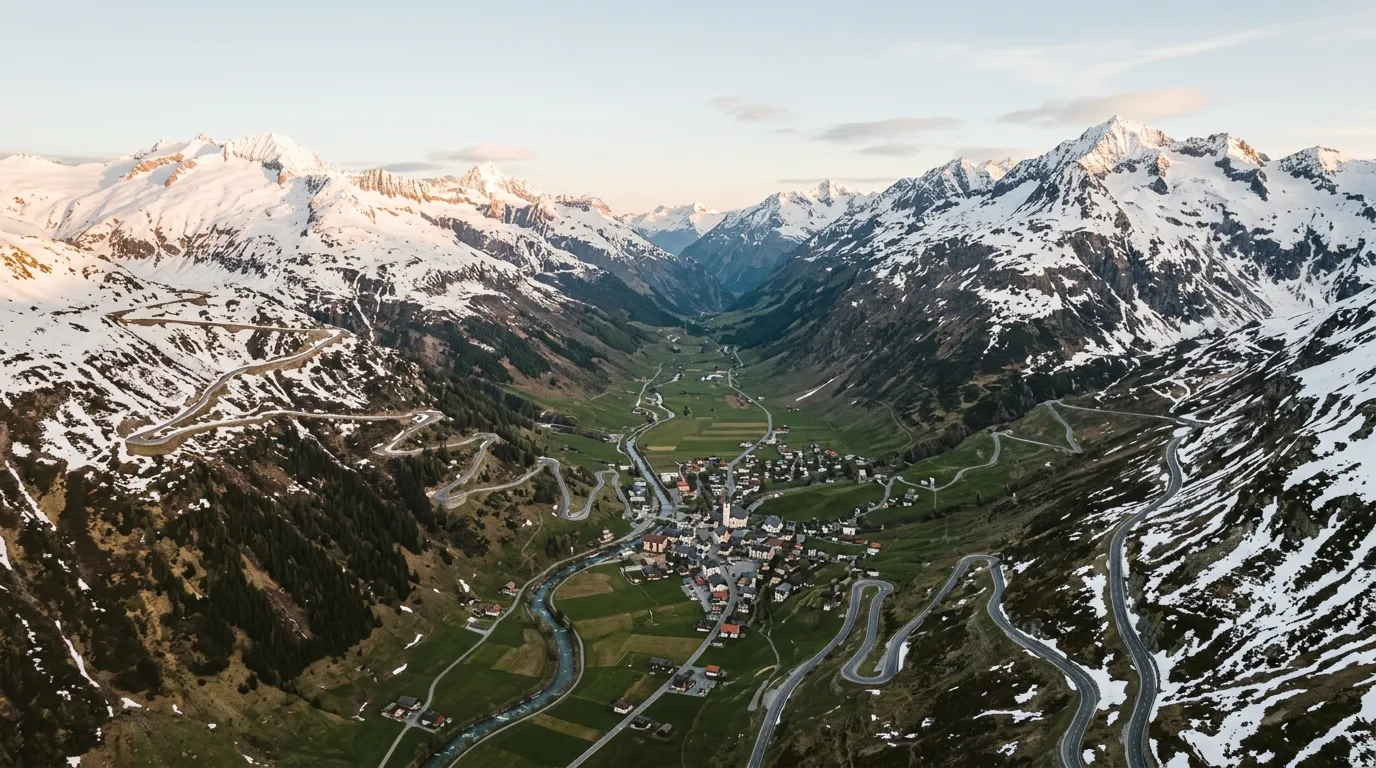
Day 1: Furka and Grimsel
Morning: Furka Pass (Andermatt to Gletsch)
Leave Andermatt early. We mean early — 7 AM if you can manage it. The Furka is the most popular pass on this route, and on summer weekends, the eastern hairpins start to fill by 9 AM. You want to climb those sixteen switchbacks with empty road ahead and only your engine note for company.
Drive to Realp (10 minutes from Andermatt, flat valley road) and begin the eastern ascent. The Furka takes 30-45 minutes to climb, depending on how often you stop. Stop at least once: the Hotel Belvedere viewpoint above the Rhone Glacier is mandatory, both for the view and for the Goldfinger connection.
The western descent to Gletsch is quick — sweeping curves, good visibility, and a 4-kilometer drop that feels like a reward for the hairpin work on the other side. You will arrive in Gletsch feeling warmed up and slightly smug. Good. You need that energy for what comes next.
Detailed guide: Furka Pass
Afternoon: Grimsel Pass (Gletsch to Innertkirchen)
From Gletsch, the Grimsel road begins immediately. No transition, no valley driving — you leave the Furka’s junction and start climbing the Grimsel’s granite canyon within a kilometer. The change in landscape is startling. The Furka is green meadows and ice; the Grimsel is bare rock and dark water.
The Grimsel takes 45-60 minutes to drive, and we recommend stopping at Totensee (the summit lake) for at least fifteen minutes. This is the most atmospheric spot on the entire Pentathlon route, and rushing through it to keep schedule would be a mistake we have made once and will not make again.
The northern descent from the Grimsel to Innertkirchen drops 1,500 meters through tunnels and gallery sections, with views of the Aar Valley through the rock openings. This is physically tiring driving — the descent is sustained and steep. By the time you reach Innertkirchen, you will have been driving pass road for 3-4 hours. This is enough.
Continue 10 minutes north to Meiringen for the night.
Detailed guide: Grimsel Pass
Overnight: Meiringen
Meiringen is a proper Bernese Oberland town: comfortable hotels, good restaurants, a bakery on every corner (meringue was allegedly invented here, though the French disagree, and the argument has been running for centuries). The town sits at 595m, which means warm evening air after a day spent above 2,000 meters.
For accommodation, we recommend anything in the town center. Meiringen is small enough that location does not matter much — everything is within walking distance. Park the car, walk to dinner, and resist the urge to talk about hairpins with your dinner companions. They will hear enough about hairpins tomorrow.
If you have energy, the Reichenbach Falls (where Sherlock Holmes “died”) are a 20-minute walk from town. There is a funicular. Between Bond on the Furka and Holmes in Meiringen, the Pentathlon has an inexplicable literary subtext.
Day 2: Susten Pass
The full day: Susten Pass (Innertkirchen to Wassen to Andermatt)
Day 2 is deliberately lighter. One pass instead of two. This is not laziness — it is logistics. The Susten is the longest pass on the route (28km), and it deserves unhurried driving. It is also the most photogenic, and we want you to have time to stop at the Steingletscher viewpoints rather than racing through because you are behind schedule.
From Meiringen, drive 10 minutes south to Innertkirchen, then begin the western ascent of the Susten. The climb through the Gadmental is gradual at first, then steepens above Gadmen with tight hairpins cut into the cliff face. This is the steep side of the Susten, and climbing it (rather than descending it) is better for your brakes.
The summit tunnel at 2,224m marks the transition to the eastern side. Descend through the sweeping curves that make the Susten famous — this is the section where every car photographer takes their money shot. Stop at the Steingletscher Hotel for coffee and glacier viewing.
Continue the eastern descent through hairpins to Wassen, then take the valley road south to Andermatt (30 minutes). You will be back at your starting point by mid-afternoon, with an evening free to rest, refuel the car, and contemplate the fact that tomorrow you will drive cobblestones.
Detailed guide: Susten Pass
Overnight: Andermatt
Andermatt has transformed in recent years from a quiet military town to a ski resort with year-round ambitions. The Chedi Andermatt is the luxury option (and genuinely excellent). For more moderate budgets, the town has several solid three-star hotels and a handful of apartments. Book in advance during July and August — Andermatt is the hub for Swiss pass driving, and accommodation fills up.
Fuel up here. Tomorrow’s route has limited fuel options between Airolo and Ulrichen.
Day 3: Gotthard and Nufenen
Morning: Gotthard Pass (Andermatt to Airolo via Tremola)
The Gotthard is the historical centerpiece of the Pentathlon. From Andermatt, drive south through Hospental and climb the thirteen modern hairpins of the northern approach. The road is smooth, wide, and efficient — the Swiss rebuilt the north side in the 1960s, and it shows.
At the summit (2,106m), stop at the Hospice for the museum and the views. Then make the choice: modern road south, or the Tremola. Take the Tremola.
The Tremola is 7 kilometers of original 19th-century cobblestones with 24 hairpins. It is loud, slow, and unforgettable. Drive in first or second gear at 20-25 km/h and let the cobblestones do the talking. They have been talking since 1832, and they have a lot to say.
Arrive in Airolo (1,175m) with rattled fillings and a grin. Fuel up here.
Detailed guide: Gotthard Pass
Afternoon: Nufenen Pass (Airolo to Ulrichen)
The Nufenen is the wildcard of the Pentathlon. At 2,478m, it is the highest paved pass in Switzerland and the least visited of the five. Where the Furka has its Bond heritage, the Grimsel its reservoirs, the Susten its curves, and the Gotthard its history, the Nufenen has… nothing. Just altitude, emptiness, and a road that climbs higher than anything else in the country.
From Airolo, drive west on the valley road to Bedretto, then begin the southern ascent of the Nufenen. The road is narrow and steep, with tight hairpins through a landscape that becomes increasingly barren as you climb. Above 2,200m, the terrain is rock and late snow, with the pass summit feeling genuinely remote despite being less than an hour from Airolo.
The northern descent to Ulrichen is similarly stark — a long, winding drop into the upper Rhone Valley. From Ulrichen, take the valley road east to Oberwald, then use the Furka Base Tunnel car train (Oberwald to Realp) to return to the Andermatt valley. The car train takes 15 minutes and saves you from driving the Furka a second time — which, after three days and five passes, would be excess rather than pleasure.
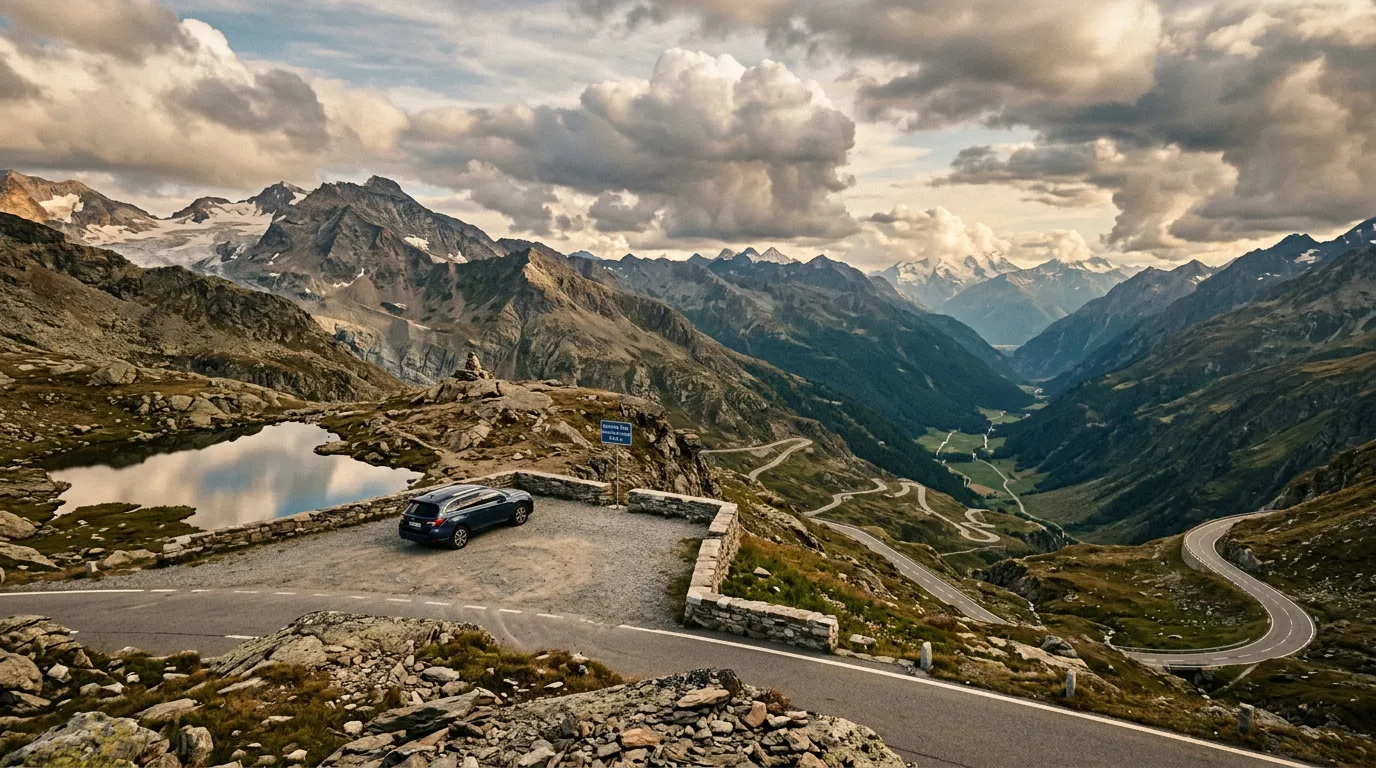
Evening: Return to Andermatt
From Realp, it is a 10-minute drive back to Andermatt. The Pentathlon is complete. Five passes, three days, approximately 280 kilometers of mountain road, and a relationship with your rental car that has either deepened into genuine affection or deteriorated into mutual resentment. (We hope the former, but have experienced the latter.)
Which car to rent
The Pentathlon does not require a sports car. It requires a car with three qualities: decent brakes, adequate power, and a manual gearbox.
Brakes: You will descend approximately 7,000 cumulative meters over three days. The Gotthard Tremola alone involves 900m of cobblestone descent. Good brakes matter more than good acceleration.
Power: Nothing extreme — 150 horsepower is plenty. But avoid the absolute bottom of the rental range. A 75hp city car will struggle on the steeper sections and will not let you overtake slower traffic when you need to.
Manual gearbox: Not essential, but strongly recommended. Engine braking saves your pads on descents, and manual gives you precise gear selection for the hairpins. If you are comfortable with automatic, fine — just use the manual override or sport mode on descents.
Our recommendations by category:
| Category | Good choices | Avoid |
|---|---|---|
| Economy | VW Golf, Skoda Octavia, Peugeot 308 | Fiat 500, Smart, anything under 100hp |
| Mid-range | Audi A3, BMW 1 Series, Mazda 3 | SUVs with high center of gravity |
| Treat yourself | Porsche Cayman, Alpine A110, BMW M240i | Anything you cannot parallel park on a hairpin |
Rent from Zurich or Lucerne for the best selection. Both are 1.5-2 hours from Andermatt on the motorway.
Practical information
| Detail | Information |
|---|---|
| Total distance | ~280km (170km of pass road + 110km of valley connections) |
| Total elevation gain | ~7,000m cumulative ascent |
| Best period | Late June to mid-September (all five passes reliably open) |
| Fuel strategy | Fuel up in Andermatt, Meiringen, Airolo. No fuel on any pass. |
| Budget (fuel) | Approximately CHF 40-50 for the full route in a mid-range car |
| Budget (accommodation) | CHF 120-200/night for a decent double room |
| Budget (tolls) | CHF 0 — all five passes are toll-free |
| Furka Base Tunnel | Car train Oberwald-Realp, ~CHF 35 per car, runs every 30 min in summer |
| Difficulty | Overall 3/5 — each pass is manageable individually; the cumulative effect is tiring |
| Direction | Clockwise from Andermatt (Furka → Grimsel → Susten → Gotthard → Nufenen) |
Individual pass guides
Each pass on the Pentathlon has its own detailed guide:
- Furka Pass — 2,429m, 16 hairpins, the Bond road
- Grimsel Pass — 2,164m, lunar granite, Totensee
- Susten Pass — 2,224m, sweeping curves, Steingletscher
- Gotthard Pass — 2,106m, Tremola cobblestones, 800 years of history
- Nufenen Pass — 2,478m, highest paved Swiss pass, pure altitude
Timing and alternatives
Three days is right. We have seen people attempt the Pentathlon in two days. It is physically possible but defeats the purpose. Mountain driving is tiring — the concentration, the altitude, the constant gear changes — and rushing through these passes robs them of their individual character.
Weekdays are better. If at all possible, drive Tuesday through Thursday. The Furka and Gotthard are significantly busier on weekends, and the difference between driving the Furka’s hairpins alone versus behind a tour bus is the difference between driving and commuting.
Weather contingency: Swiss mountain weather is unpredictable. If Day 1 is clear and Day 2 looks rainy, consider swapping: drive the Susten first (it is most affected by cloud cover, as the glacier views are the main attraction) and save the Furka/Grimsel for the clearer day. The route is flexible enough to rearrange.
Lighter alternative: If five passes in three days feels excessive, see our Engadin Circuit — three gentler passes in two days, with the Bernina Express railway as a bonus.
The Pentathlon is not the kind of thing you do once and check off a list. We have driven it three times now, in different seasons, in different cars, and the ranking changes every time. The Furka was best in September fog. The Grimsel was best in June, with fresh snow on the granite. The Tremola was best always. This is a route that rewards repetition, and each time you arrive back in Andermatt after three days on these roads, you are already planning the next one.